When and Where
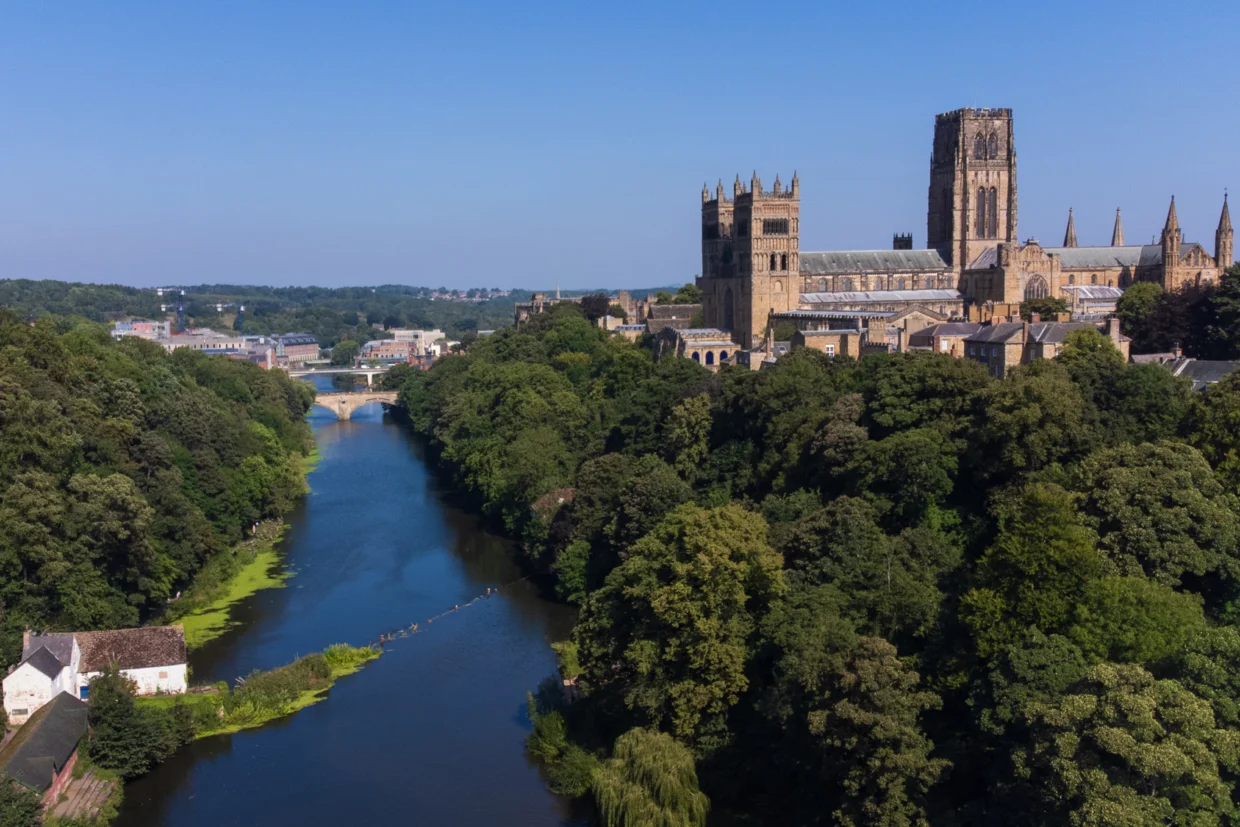
The CVSS 2026 social event will take place on Tuesday, 14th July 2026, beginning at 7:00 PM at the magnificent Durham Cathedral, a UNESCO World Heritage Site dramatically situated above the River Wear.
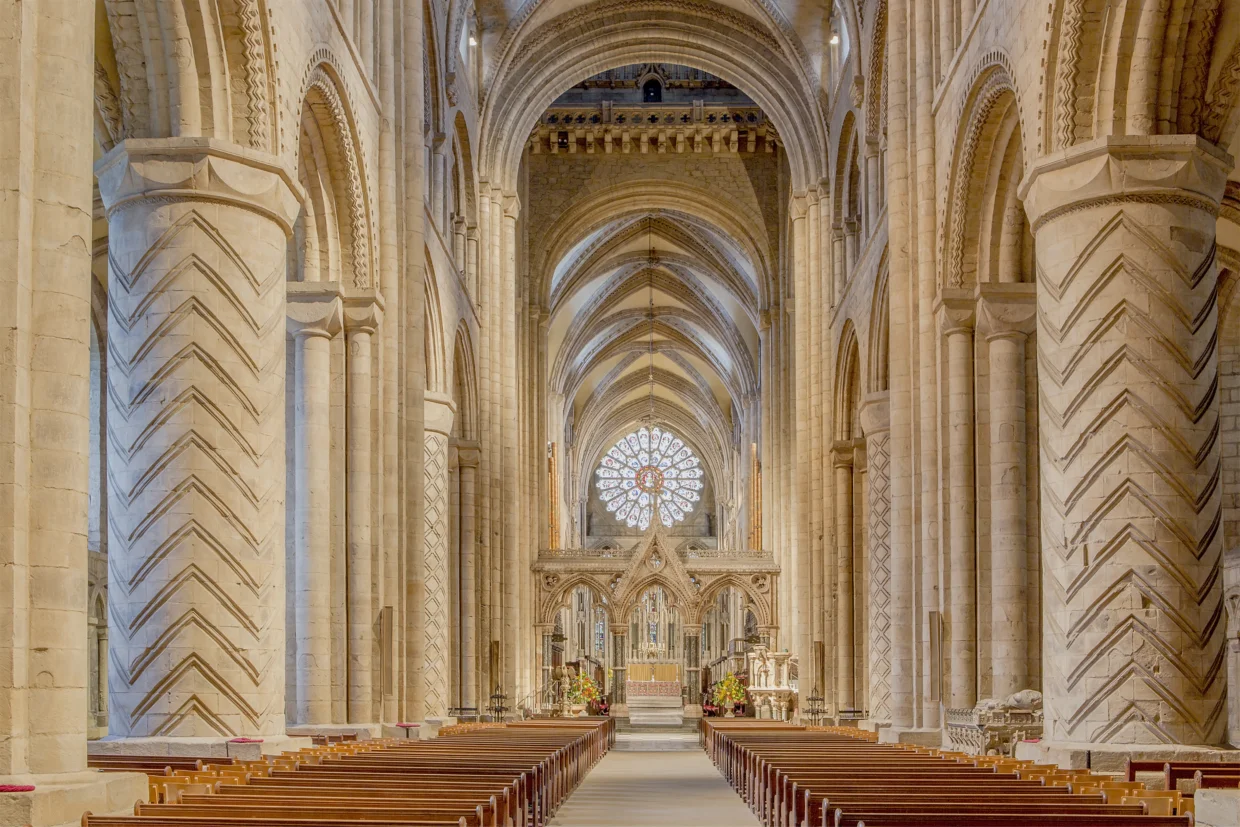
The evening will open with a private guided tour of the Cathedral, led by expert guides who will introduce the building’s remarkable Norman architecture, soaring nave, and innovative rib-vaulted ceiling, often regarded as a precursor to Gothic construction. The tour will explore the Cathedral’s rich history as a centre of pilgrimage and learning, including stories connected to St Cuthbert and the Venerable Bede, while highlighting architectural details, spatial design, and viewpoints that are rarely appreciated during daytime visits.
Following the tour, guests will be welcomed to a drinks reception in the Cathedral’s Chapter House, an atmospheric historic space that has served for centuries as a place of gathering and discussion. This reception will provide a relaxed setting for conversation and networking, offering a memorable opportunity to continue discussions among CVSS participants within one of the UK’s most iconic historic environments.
About Durham Cathedral
Durham Cathedral, formally the Cathedral Church of Christ, Blessed Mary the Virgin and St Cuthbert of Durham, is a Church of England cathedral in the city of Durham, England. The cathedral is the seat of the bishop of Durham and is the mother church of the diocese of Durham. It also contains the shrines of the Anglo-Saxon saints Cuthbert and Bede. There are daily Church of England services at the cathedral, and it received 393,090 visitors in 2024. It is a grade I listed building and forms part of the Durham Castle and Cathedral World Heritage Site.
The cathedral is the successor to the Anglo-Saxon Lindisfarne Priory, which was established c. 635 but abandoned in 875 in the face of Viking raids. The monks settled at Chester-le-Street from 882 until 995, when they moved to Durham. The cathedral remained a monastery until it was dissolved in 1541, since when it has been governed by a dean and chapter. The cathedral precinct formed part of Durham Castle from the eleventh century. During the Wars of the Three Kingdoms the cathedral housed 3,000 Scottish prisoners of war, 1,700 of whom died in the building.
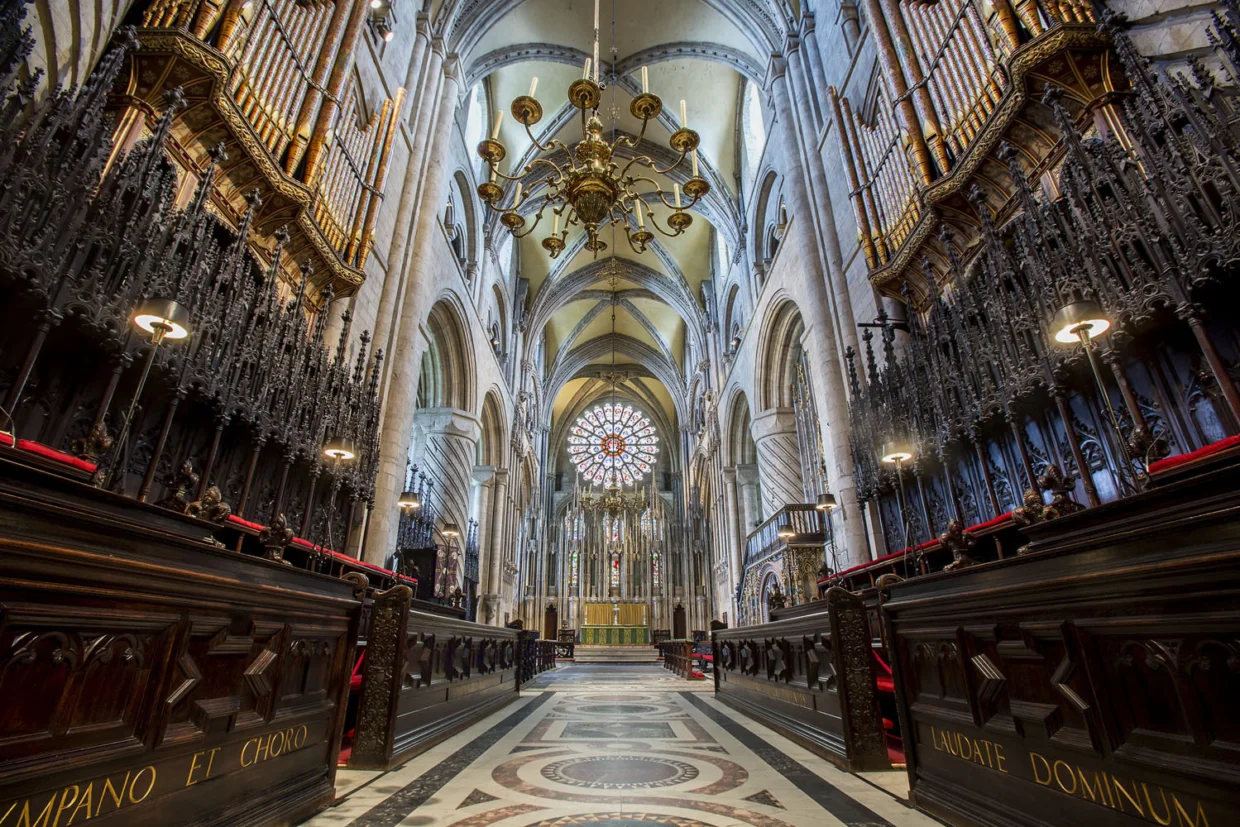
A substantial part of the present building was completed between 1093 and 1133, replacing the Anglo-Saxon “White Church”. It is a significant example of the Romanesque architectural style, and the nave ceiling is the earliest surviving example of a pointed rib vault. The Galilee chapel was added to the west end of the cathedral in the 1170s, and the western towers built in approximately 1200. The east end was expanded in the Early English Gothic style in the 1230s, and the Perpendicular Gothic central tower was built in two stages in the fifteenth century. Important furnishings include the medieval bishop’s throne and Neville screen, Prior Castell’s Clock, and the seventeenth-century choir stalls and font cover installed by Bishop Cosin. Many of the monastic buildings survive; the monks’ refectory now contains part of the cathedral library, which holds significant collections dating back to the sixth century. (Reference: https://en.wikipedia.org/wiki/Durham_Cathedral)
Getting there from St Chad’s College Accommodation
The Durham Cathedral is located approximately 0.1 miles (about a 5-minute walk) from St Chad’s College accommodation.
Getting there from Maths and Computer Science Building at Durham University
The Durham Cathedral is located approximately 1.1 miles (about a 25-minute walk) from the Maths and Computer Science Building at Durham University.
(Images courtesy of Durham Cathedral)